Every mode a contribution link needs
H.264 4:2:0 8-bit, and HEVC 4:2:0 and 4:2:2 at 8 and 10-bit, selectable per channel.

Contribution-grade chroma and bit depth on both ends of the link, from a box small enough to travel.
H.264 4:2:0 8-bit, and HEVC 4:2:0 and 4:2:2 at 8 and 10-bit, selectable per channel.
The same unit encodes and decodes in hardware, so both directions of a link run in the same chroma and depth.
1080p50 and 1080p60 on the shipping platform, encoding and decoding at once at the full 50 Mbps. 720p50 in every codec mode.
Every mode runs at full rate except HEVC 4:2:2 10-bit at sustained 1080p60; there, 4:2:0 10-bit or 4:2:2 8-bit is the mode to pick.
1080i50 is carried at full rate with both fields preserved; the stream is progressive-coded.
UDP, RTP, SRT and RIST out; the decoder also takes RTMP/RTMPS, RTSP, HLS and HTTP(S) in.
Grading-friendly 4:2:2 10-bit from the venue.
The same mode back to the field on the same box.
One unit per camera position or per location.
H.264 where a receiver needs it, HEVC where the link is tight.
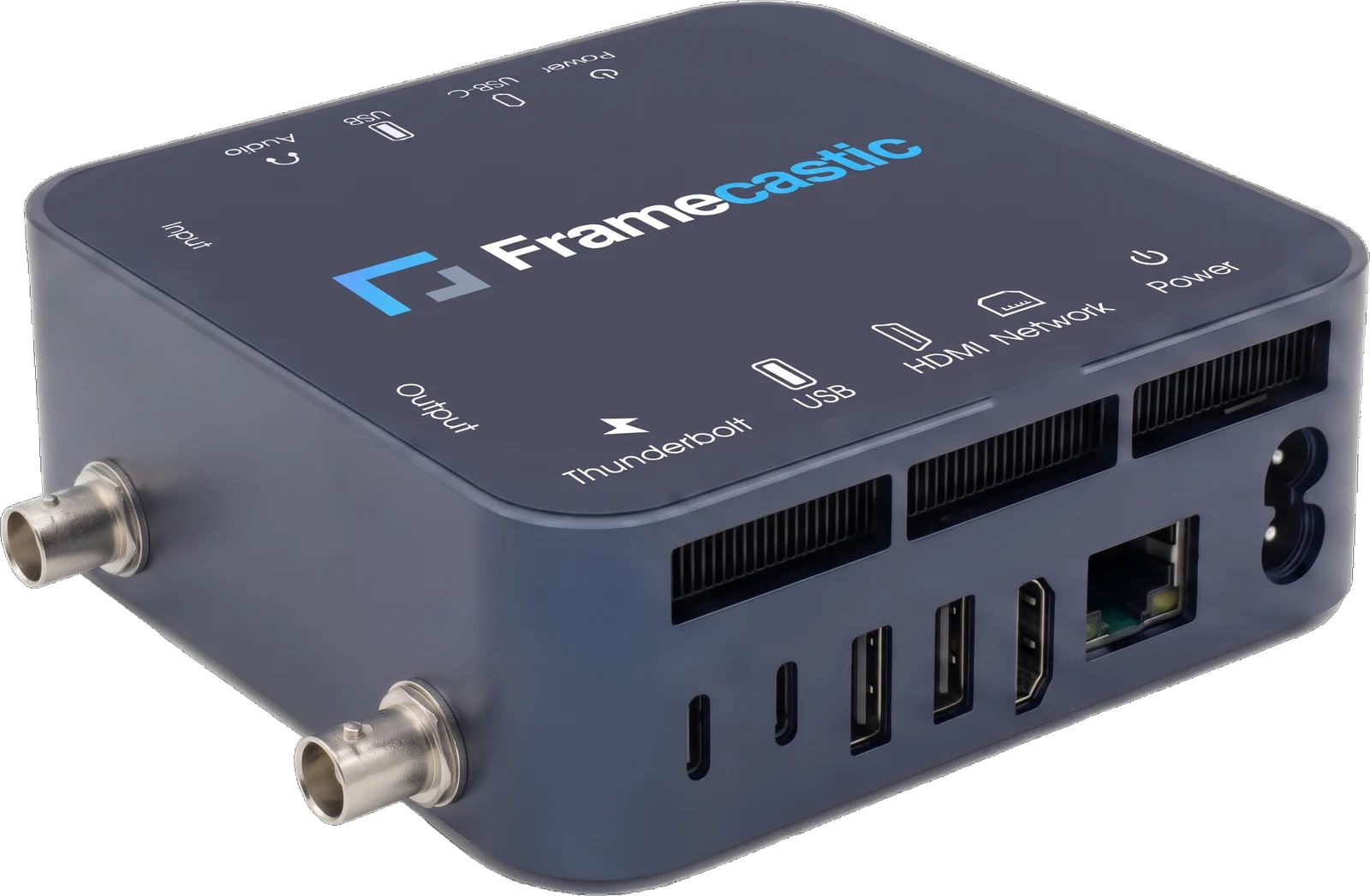
Figures on this page were measured on the Portable Codec; the Compact SDI Codec shares its codec modes.
Remote access to a running unit first, then a unit on site for a couple of weeks, with a written report you keep either way.